RESEARCH

OVERVIEW

We study social behavior, focusing not just on how people act, but why. Many of our current projects examine how ecological conditions (like pathogen prevalence, resource availability, and population density) fundamentally shape the way people connect with others, drawing on social, evolutionary, and ecological perspectives. We use a variety of methods in our research, including lab experiments, online surveys, field studies, analyses of social network datasets, and simulations using large language model agents.

We are presently exploring themes like:

  • How does living in regions with higher disease risk shape people’s everyday social ties and activities?
  • How does feeling like resources are scarce (or could change suddenly) affect the choices people make?
  • How does living in crowded vs. spread-out neighborhoods shape the way people see themselves and treat others?
  • Can we model social behavior under ecological threat using large language model-based agents (AI simulated individuals)?

See our publications below.

under review

  1. 2026_places.png
    Multi-decade pathogen threat and social ties: Strengthening bonds, weakening bridges
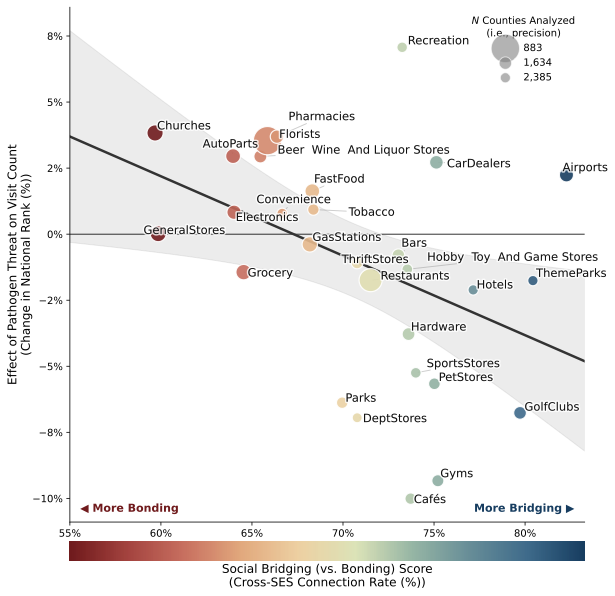
    S. Choi, O. Jeong, Y. Cha, and N. R. Buttrick
    under review

in press

  1. 2026_ehb.png
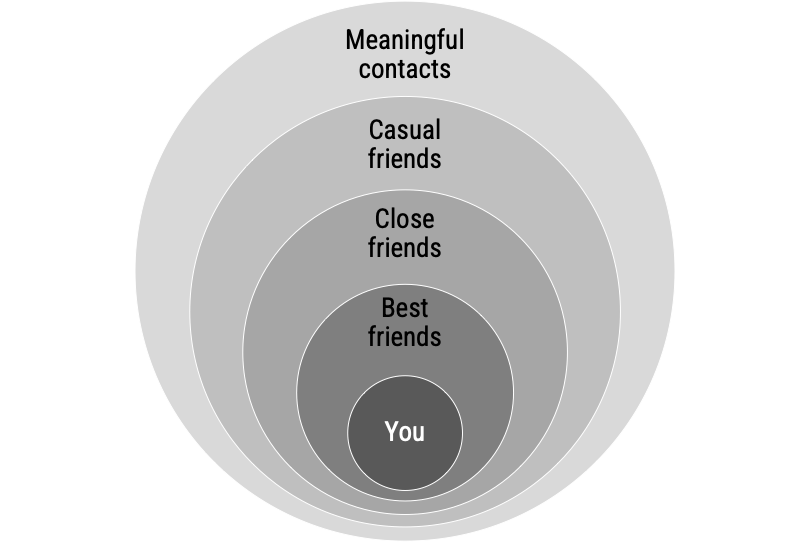
    Infectious disease concerns predict narrow friendship networks
    S. Choi and J. M. Ackerman
    Evolution & Human Behavior, in press
2025

  1. ackerman2025sick.jpg
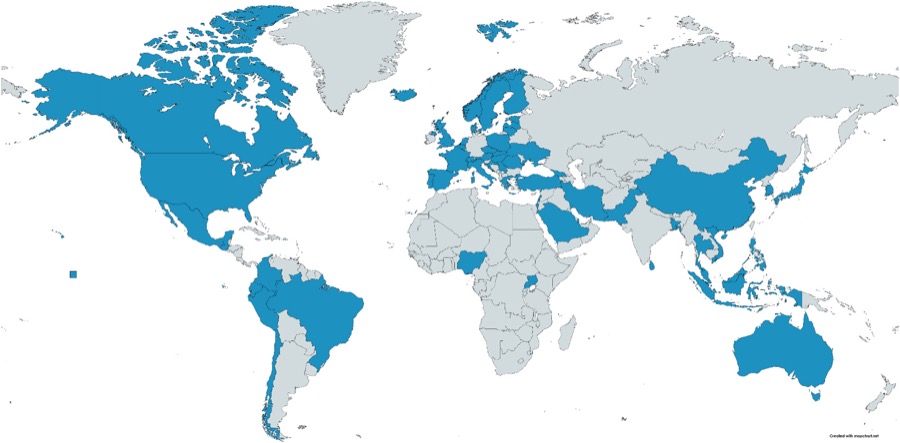
    I see sick people: Beliefs about sensory detection of infectious disease are largely consistent across cultures
    J. M. Ackerman, T. Samore, D. M. T. Fessler, T. R. Kupfer, S. Choi, and 2 more authors
    Brain, Behavior, and Immunity, 2025
  2. 2025_smallville.png
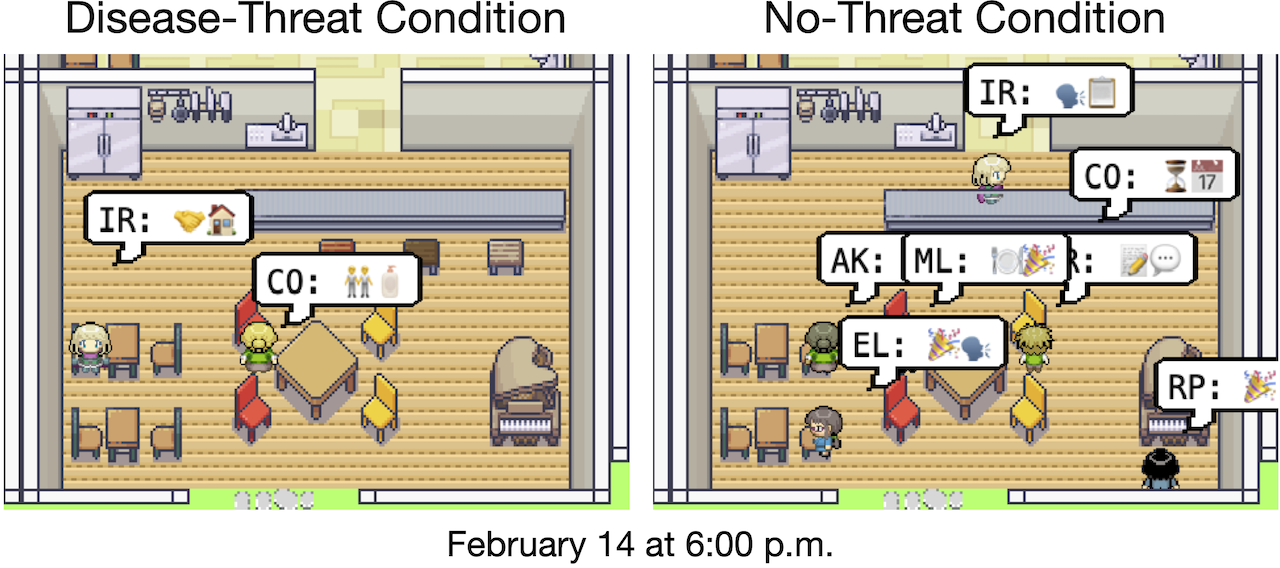
    Infected Smallville: How disease threat shapes sociality in LLM agents
    S. Choi, K. Lee, O. Sng, and J. M. Ackerman
    In International Conference on Machine Learning (ICML) MAS Workshop, 2025

2024

  1. merrell2024conceal.png
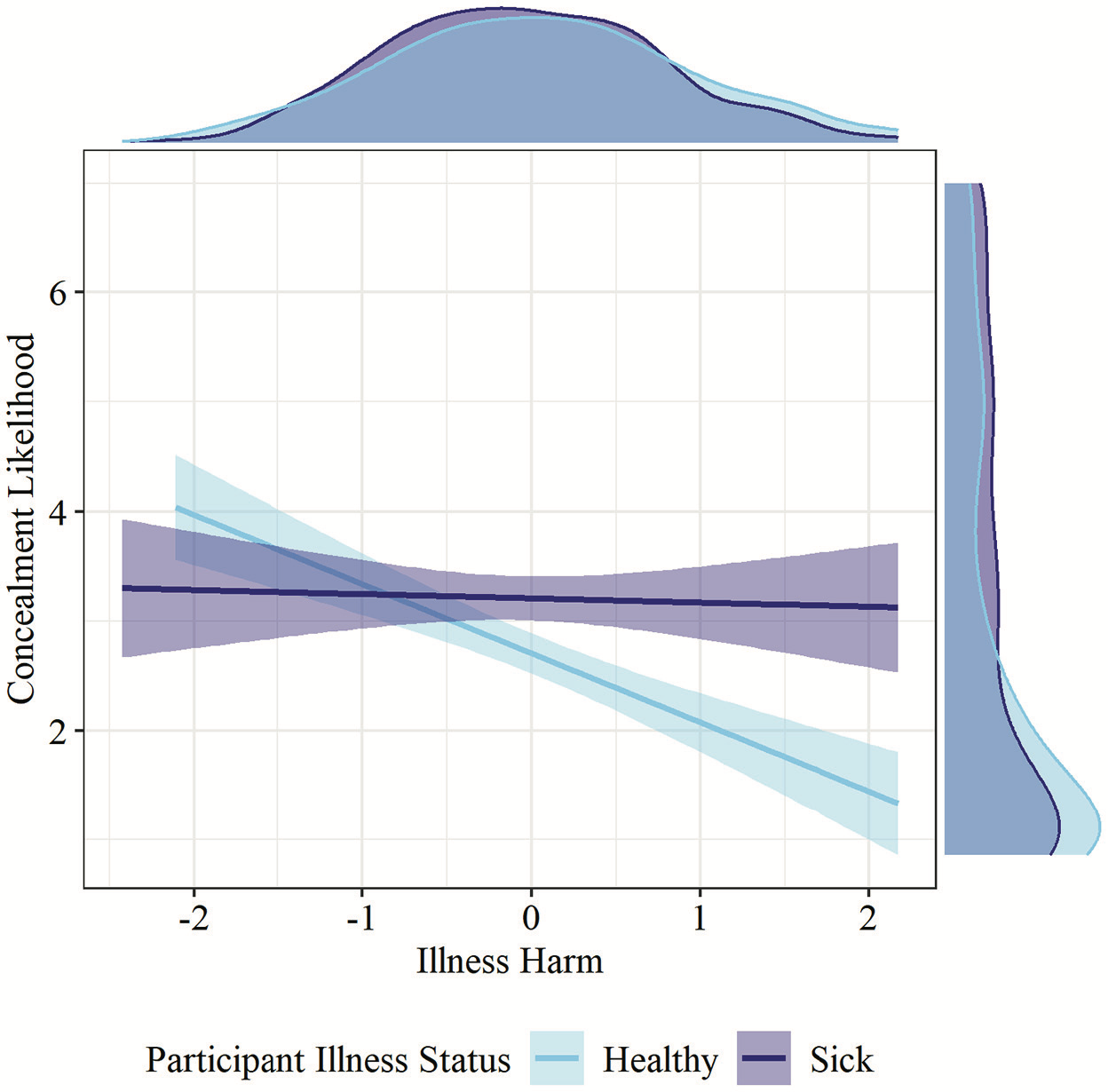
    When and why people conceal infectious disease
    W. M. Merrell, S. Choi, and J. M. Ackerman
    Psychological Science, 2024

2023

  1. choi2023safety.jpg
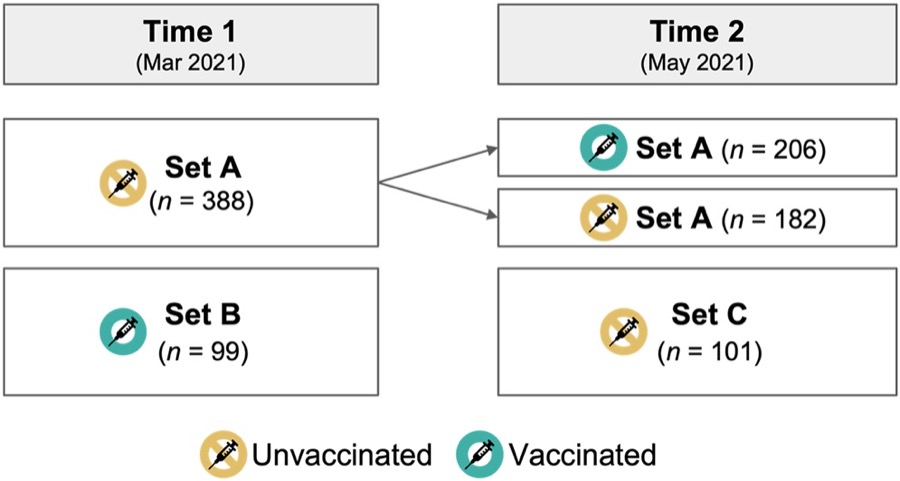
    Safety first, but for whom? Shifts in risk perception for self and others following COVID-19 vaccination
    S. Choi, W. N. Merrell, and J. M. Ackerman
    Social and Personality Psychology Compass, 2023

2022

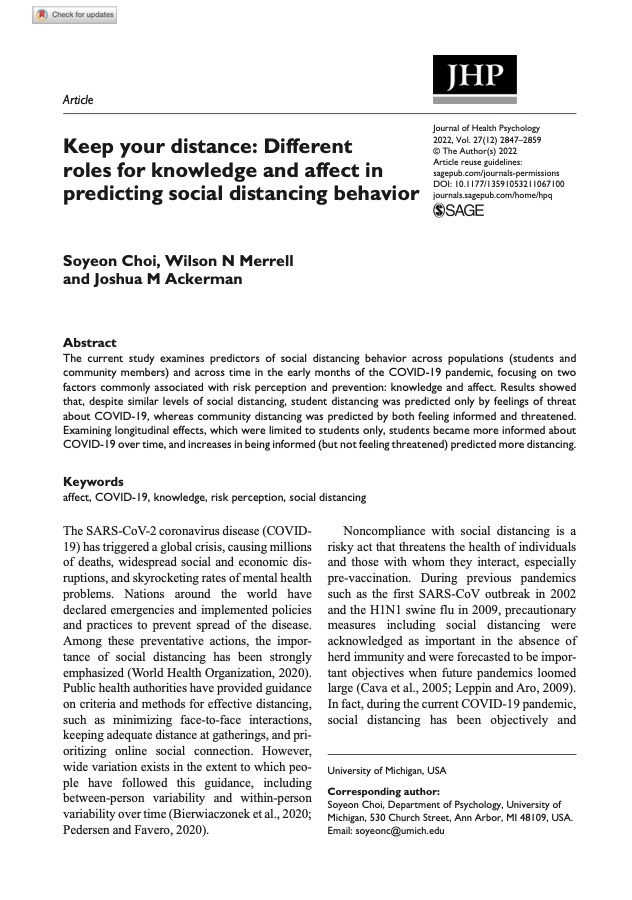
  1. choi2022distance.jpg
    Keep your distance: Different roles for knowledge and affect in predicting social distancing behavior
    S. Choi, W. N. Merrell, and J. M. Ackerman
    Journal of Health Psychology, 2022

2020

  1. ackerman2020detecting.jpg
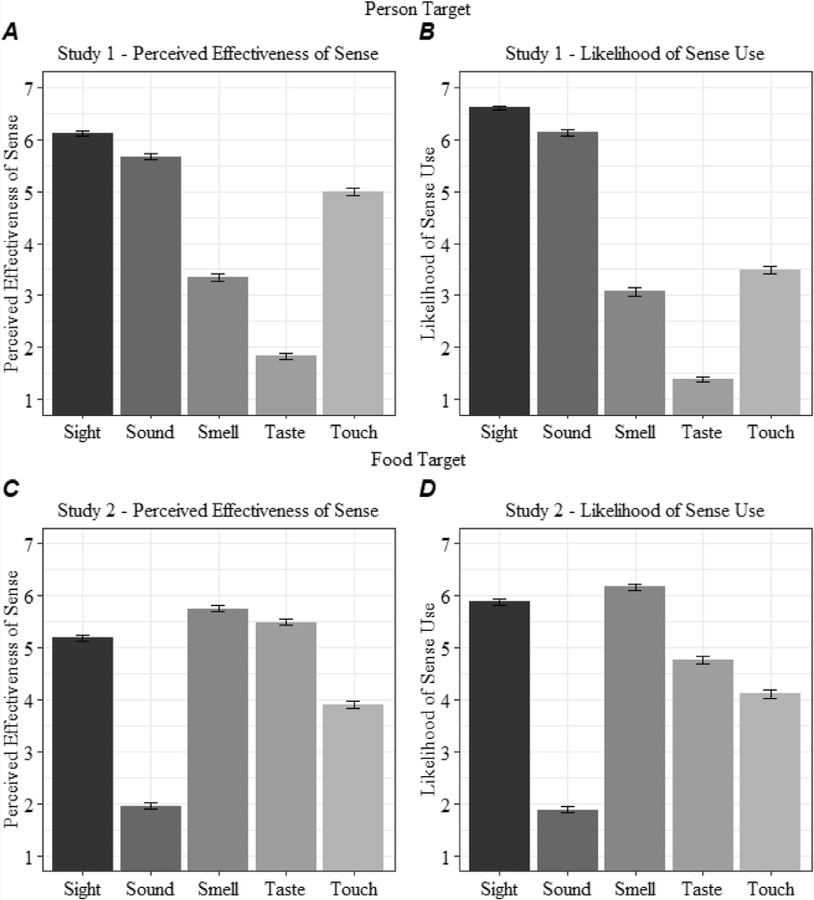
    What people believe about detecting infectious disease using the senses
    J. M. Ackerman, W. N. Merrell, and S. Choi
    Current Research in Ecological and Social Psychology, 2020
  2. lee2020situational.jpg
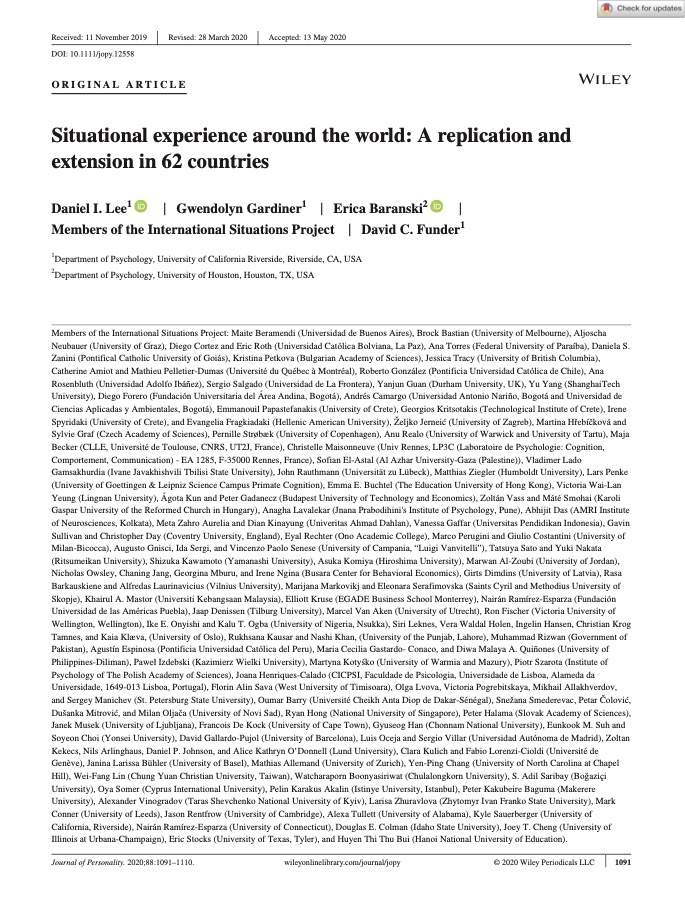
    Situational experience around the world: A replication and extension in 62 countries
    D. I. Lee, G. Gardiner, E. Baranski, International Situations Project Members, and D. C. Funder
    Journal of Personality, 2020

2018

  1. choi2018retrospective_firstpage.png
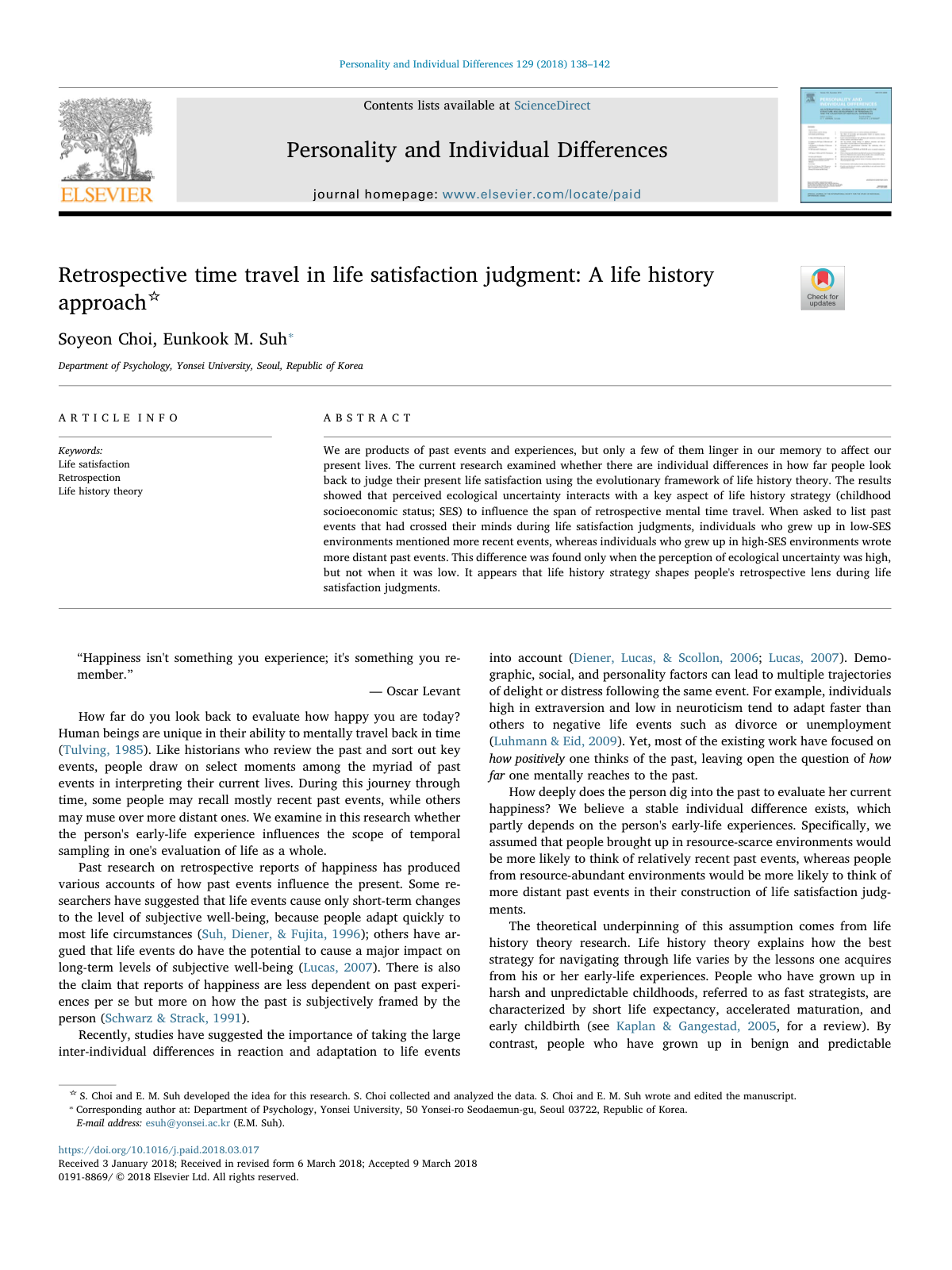
    Retrospective time travel in life satisfaction judgment: A life history approach
    S. Choi and E. M. Suh
    Personality and Individual Differences, 2018
  2. suh2018predictors.jpg
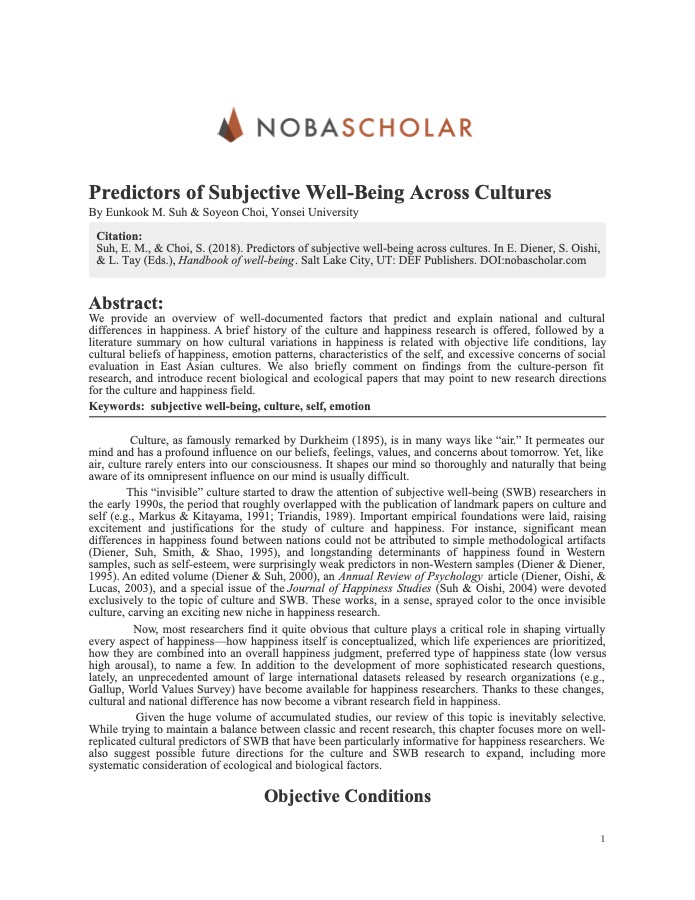
    Predictors of subjective well-being across cultures
    E. M. Suh and S. Choi
    In Handbook of Subjective Well-being, 2018